Well here I am again writing my blog and wanting to share my good news about being a Manual Handling Instructor. I found the course very good and very informative. To be honest I also found it a bit daunting. Looking back I really did too much on my assignments however I did find the subject very interesting. I personally learnt about the process of learning and about 'surface learning' and how the information needs time to filter.
I am delighted that I did the course and now I am awaiting the results of exams and the two assignments. I must say the group of learners were fantastic and very inspiring characters. All walks of life, the common denominator that linked us together was that we were healthcare Professionals. I'll keep you posted on the developments of being a Manual handling Instructor..
audit conference
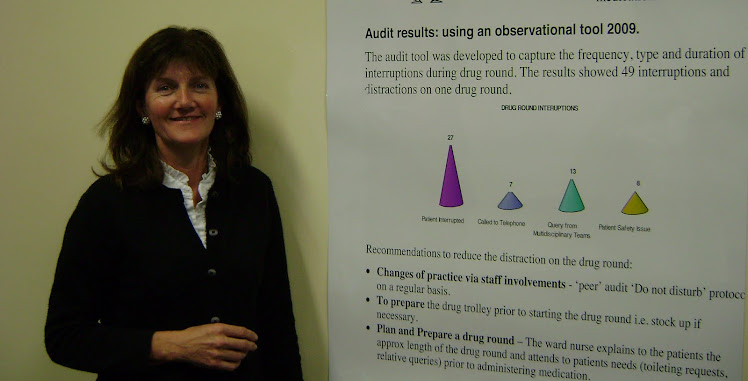
audit conference
Wednesday, November 29, 2017

Saturday, January 4, 2014
What woud you do??
Happy New Year 2014.
I would like your feedback on the link I have added. http://www.rte.ie/radio/utils/radioplayer/rteradioweb.html#!rii=9%3A20498830%3A0%3A%3A
Go ahead and tell me what would you do in this situation......
I would like your feedback on the link I have added. http://www.rte.ie/radio/utils/radioplayer/rteradioweb.html#!rii=9%3A20498830%3A0%3A%3A
Go ahead and tell me what would you do in this situation......
Friday, July 19, 2013
INMO website
In April 2012 I completed my thesis on “Whether there is sufficient support to support newly registered nurses to administer medication safely”? The findings prompted me to organise a series of six educational conferences, which addressed the hugely important issue of medication use, side effects and interaction. Now, in 2013 I am please to announce that some of my work is now published on the INMO website.
Click on: http://www.nurse2nurse.ie/N2NPage_0_1.aspx As well as: http://www.nurse2nurse.ie/desktopmodules/N2N/viewArticle.aspx?itemID=7158&tabID=1 to access the pain management conference.
Thursday, June 27, 2013
Laughing bankers – should be sent to jail.?
The audio recordings (released by Mr. McWilliams) are from the bank's own internal telephone system and date from the heart of the financial crisis that brought the State to its knees in September 2008. “The astonishing tapes show senior manager John Bowe, who had been involved in negotiations with the Central Bank, laughing and joking as he tells another senior manager, Peter Fitzgerald, how Anglo was luring the State into giving it billions of euro”. Utter disgust at these guys laughing at us, the public. Mr Bowe is asked by Mr Fitzgerald how they had come up with the figure of €7bn. He laughs as he is taped saying: "Just, as Drummer (then-CEO David Drummer) would say, 'picked it out of my arse'."
The question is what to do now? I feel we should not have an oireachtas enquiry, we need a criminal investigation. We do not need a talking shop. The questions, and there are many - Where was the board of directors of Anglo? It’s inconceivable that they were not aware of what was going on? These laughing bankers have strong powers and these guys were running rings around the regulators/government/Central bank personnel. Where was the media when this was going on? What is the strength of our corporate law? How come, Anglo Irish Bank had a clean bill of health 3 months before the collapse?
Imagine – the head of the new financial service regulatory body 2004 Mr. Pat Neary (the most important job to overlook the banking system in Ireland) it took 2 years for Mr. Brian Cowen to meet Mr. Pat Neary!!
How much can this country take (Ireland)? Is suicide on the rise due to this farce/disaster? Is there a problem with ineptitude in our society? For example; when the HSE was asked how many children died under their care (with all the IT equipment and 600 highly educated staff in the department) there was an inconclusive answer.
As a tax payer I have to accept these laughing bankers’ jokes to say no to further investigation into our financial crisis we are in. I know any investigation will lead to the supreme courts and more money for barristers to know, what we already know. If we were in England the finical services would have Mr. Drummer in jail. The executives of the Irish banks knew that back in 2008 we were in financial crisis. Yet, their jobs have been kept/secure. We are now dependant on Germany and for many years to come. We have disgraced ourselves and the embarrassment of the ‘laughing bankers’ singing ‘auf Deutschland’ what a disgrace.
Wednesday, June 12, 2013
Forming a committee for Clinical Facilitators/ Education in 2013
I am a Clinical Facilitator (CF) for the last couple of years in a Dublin Hospital. I found when talking to my fellow colleagues/friends who are also CF/Education that there is such a huge variance and responsibilities in our roles. We felt that we needed to come together and share/support each other in similar projects. For example, I am working in isolation on a particular projects (trying to re invent the wheel) and subsequently found out that another CF had gone through the same process, crazy! By forming a committee it would give us recognition and support we need in the clinical areas – never mind the financial implications.
Getting together as a body by sharing each other’s experiences and forming a network would be amazing. It took Deirdre O’Kelly and Lorraine Kennedy from the Mater Private Hospital(well done) to call a meeting to discuss the formation of a committee for Clinical Facilitators/Education. At that meeting last April 2013, there was a strong consensus that a formalised group may assist with a greater recognition of the facilitator/education role. We planned to take the following steps in order to formalise the group. A joint chair person was I and Deirdre 0’Kelly (Mater Private Hospital).The elected secretary was Lorraine Kennedy (Mater Private Hospital).
We suggested for a representatives from each hospital in Ireland would be the ideal situation. We acknowledged that there had in the past been a previous Clinical Facilitator group. However, it did not appear to have been any meetings in the past few years. We are also aware that there are many other facilitators out there that we may not have been able to contact as the e-mail list we had was not a current and up to date list. I contacted Cora Mc Crystal Education Dept Nursing and Midwifery Board of Ireland. She gave me a link to contact fellow colleagues in our role. http://www.nursingboard.ie/en/professional_practice.aspx I was able to get some contacts to spread the word about our cause. Another suggestion is to, in the near future, to advertise the group in the INMO magazine to highlight the importance of our role to our CNM colleagues and hospital management.
We had our second committee meeting in Tallagh Hospital on the 22nd May last. It was suggested that we would have greater attendance at our meeting if we were part of a subgroup. The Practice Development group hold yearly conferences, that maybe the Facilitator/Education Group could be part of it. What is needed now is, to submit a requesting letter to the practice development committee along with ‘our terms of reference’. At this stage we have given ourselves till the 20th June for the feedback on the draft ‘Terms of reference’. Once that is completed we move to the next stage ........
Monday, December 10, 2012
What every parent should discuss . . . . . . . .
I came across T.E.D talks and discovered this wonderful speaker. Why don't we get the best out of people? Sir Ken Robinson argues that it's because we've been educated to become good workers, rather than creative thinkers. Students with restless minds and bodies -- far from being cultivated for their energy and curiosity -- are ignored or even stigmatized, with terrible consequences. "We are educating people out of their creativity," Robinson says. It's a message with deep resonance. Robinson's TEDTalk has been distributed widely around the Web since its release in June 2006. The most popular words framing blog posts on his talk? "Everyone should watch this." I would love your feedback
http://www.ted.com/speakers/sir_ken_robinson.html
http://www.ted.com/speakers/sir_ken_robinson.html
Saturday, March 17, 2012
Planning for the 19th April 2012
Happy St. Patrick's Day.

I am planning to organise a study day for the 19th April 2012. I want to show all the hard work that was performed in the 2011 "Setting Standards in Medication Management". The video recordings of each of the specialist presentations are presently being put together as an educational tool. For this study day I want to hold a workshop to demonstrate not only the work from the last years conference but other work that has been done. I am also to putting a workbook that will support nurses while administering medication in the clinical environment.
Any suggestions for this study day would be appreciated.
I need to promote the "first Irish phone App, that was designed by a nurse for a nurse" Dosage Calc for my Irish colleagues. Its bazaar the phone App has reached 106 thousand hits (Android phone) and about 40 thousand for the iphone.
Saturday, February 18, 2012
Still chipping away - trying to find the perfect solution to administering medications safely to patient's.
It is generally assumed that nurses undertaking drug administration have been adequately trained. Competence may be lacking both in the ability to perform requisite numerical calculations (medication calculation, intravenous regulation, and intake and output calculations) and in the ability to conceptualize the mathematical problem. While many nurses are aware of inadequacy in this area, they are unwilling to admit to it. The situation may be exacerbated in specialist areas (e.g., paediatrics) where more complex mathematics is required and where the consequences of miscalculating the dose are far more severe than in adults.
The administration of medication to patients is a significant part of a nurse’s role. Nurses frequently experience many interruptions during medication administration, which may lead to increasing errors. The causes of poor medication management are: Distractions and interruptions, Heavy workload, insufficient educational support and lastly Poor competence in calculations. Working as a Clinical Facilitator with newly qualified as well as experienced staff nurses, I feel that nurses need a lot more support with drug calculations. I consulted a friend of mine who is a computer programmer; we developed an application for mobile phones called “Dosage Calc”.
This application is designed as a ‘second checker’. The idea is that when the nurse is ‘single’ administering medication, she/he can use the application as a means to second check. The idea is that they can use the application to re assure themselves that they have got the correct answer. Among other things, the application covers tablet dosage, volume of liquids and dosage for body weight but also covers IV drop rates for infusions. The beauty of using this application is that it be used when mobile is in ‘flight mode’.
Monday, October 3, 2011
Drug treatment in Urology
The final conference came about so quickly, it was on the 19th September 2011, . The theme of the conference was on drug treatments in Urology. We had an excellent program lined up for the day. As usual I conducted the pre- lecture survey, asking attendees about their knowledge on urology and some of the treatments provided in the area.
The first lecture was given by Brid Byrne from A&E in St. Michael's Hospital. Brid gave us a very comprehensive and detailed talk on the anatomy and the physiology of the urinary tract as you will read below
https://docs.google.com/present/edit?id=0AfiCRfy-aXfjZG45cGg0bl8xOTY5ZHc0YjN4dmg&hl=en_US
The second lecture was given by Mary Jacob, AMP Women's Health. National Maternity Hospital. The title of her presentation was "Nurse prescribing, continence /overactive bladder". In her lecture she described the different types of bladder storage problems: overactive bladder, stress urinary incontinence and mixed incontinence. Mary described the symptoms and the treatments for over active bladder. How the medical management can be divided into either drug agents or behavioural modification. She completed her excellent presentation by describing the side effects of medications for urgency urinary incontinence. I have downloaded it below.
https://docs.google.com/leaf?id=0B_iCRfy-aXfjNzNlYTc1MTYtMGVjMy00ZmVhLTlkYTgtMzQ4NzFhNmY2Mzhj&hl=en_US
The next presentation was from Teresa Ronan Product specialist from Braun Company. Teresa discussed the two types of catheterisation: intermittent Catheterisation (being a clean procedure) and Indwelling catheterisation (being a sterile procedure). In her lecture she then described how the indwelling catheter was subdivided into urethral and supra-pubic catheterisation. She talked about the associated risks with the urethral and the supra-pubic infection - 44% of hospitalised patients develop urinary tract infections. She gave useful guidance on how to manage urinary tract infection and gave advice on catheter blockage and use of maintenance solutions.
https://docs.google.com/leaf?id=0B_iCRfy-aXfjMTExMmEyN2ItMzViYi00MGI2LTk1NWQtOTg5YTM2ZjYwNzM3&hl=en_US
The follow-on lecture after the coffee break was from Helen Forristal, Urology Cancer Nurse Specialist from St. Vincent’s University Hospital. She presented with Intravesical Treatments for Bladder Cancer. She described the stages of bladder cancer: Primary tumour to extended lymph node involvement to presence and the extent of distant metastases. She talked about the alarming report re- the CIS (Carcinoma in situ) where there is a high risk of disease progression, with an average 54% developing invasive disease in a five year period. She then presented on the uses of Mitomycin C answeing questions e.g. When is Mitomycin C used? Why use Mitomycin? The side effect profile, the single dose Mitomycin C, the 4-8 week course Mitomycin C, the maintenance of Mitomycin C and lastly she talked about Patient Information.
Next Helen explained about the comparison of BCG – Bacillus Calmette Guerin with Mitomycin C. How BCG is a live attenuated tuberculosis vaccine and that it has a neoplastic effect on the tumour. How it should be considered for patient’s following a Trans Urethral Resection for the prophylaxis of tumour recurrence in patients with medium to high risk Ta and T1 bladder cancer. How it has been quoted that "BCG is said to be superior to Mitomycin C in reducing recurrence of bladder cancer". Helan then talked about the use of BCG for the patient and the HCP. As well as the health and safety issues associated with BCG.
https://docs.google.com/viewer?a=v&pid=explorer&chrome=true&srcid=0B_iCRfy-aXfjMGZkOWJiMjUtMGM2Yy00YWEwLWI3ZjItNDgxM2JjNDllZTc4&hl=en_US
https://docs.google.com/viewer?a=v&pid=explorer&chrome=true&srcid=0B_iCRfy-aXfjMGZkOWJiMjUtMGM2Yy00YWEwLWI3ZjItNDgxM2JjNDllZTc4&hl=en_US
Helen's second lecture was on hormonal treatment for Prostate Cancer. She talked of how prostate cancer is the most commonly diagnosed cancer amongst men in many industrialised nations. Rates of prostate cancer vary widely across the world. Although the rates vary widely between countries, it is least common in South and East Asia, more common in Europe, and most common in the United States. (American Cancer Society). She talked about the routine investigations from DRE (digital rectal examination), to TRUS guided biopsy to bone (if applicable). How Prostate cancer is hormone-dependent LHRH, luteinising hormone-releasing hormone LH, luteinising hormone ACTH and adrenocorticotrophin. Helen then discussed the Medical Endocrine Therapy Options: LHRH analogue, Anti-androgen and Oestrogen. She gave a breakdown of the main side effects of these treatments. Helen completed her presentation on the importance of the holistic care of the patient.
https://docs.google.com/viewer?a=v&pid=explorer&chrome=true&srcid=0B_iCRfy-aXfjM2FhZWRmZDEtN2M1MS00YjgwLTk4YmQtN2U5OGZmY2IyYTg4&hl=en_US
https://docs.google.com/leaf?id=0B_iCRfy-aXfjOWIwYThkNjYtN2ExOC00ZDY2LWE2N2UtMjBmMDljNjFjZWZj&hl=en_US
https://docs.google.com/viewer?a=v&pid=explorer&chrome=true&srcid=0B_iCRfy-aXfjM2FhZWRmZDEtN2M1MS00YjgwLTk4YmQtN2U5OGZmY2IyYTg4&hl=en_US
Mary spoke about benign prostate hyperplasia (BPH) and that this is a common condition affecting older men. BPH is commonly defined as a benign enlargement of the prostate gland due to an increase in cellular proliferation which can lead to a range of lower urinary tract symptoms (LUTS).
This condition has a very significant impact on the activities of daily living. She spoke about the assessment of these patient’s in the Uroflow Clinic, and follow up in the Urology Outpatient’s Department. The patient will have blood tests for PSA, U&E. Digital rectal examination and residual urine
volume is measured. The medical treatments currently available are, Alpha Blockers, 5 Alpha Reductase Inhibitors, Combination therapy, and drugs for overactive bladder.
If medical therapy fails, surgery may be indicated.
https://docs.google.com/leaf?id=0B_iCRfy-aXfjOWIwYThkNjYtN2ExOC00ZDY2LWE2N2UtMjBmMDljNjFjZWZj&hl=en_US
Tuesday, August 23, 2011
Pain conference on the 19th August 2011.
The second last conference was held last Friday - 19th August. I must say we had an excellent line-up of presentations. To start the day, I discussed the objectives of the six conferences and how education on drugs is a necessity for nurses. Where medicines are prescribed by the doctor and dispensed by the pharmacist, but the responsibility for correct administration rests with the nurse!!
The first lecture of the day started off with Lynn O'Connor MSC, CNS Pain Management from the Beacon Hospital, Dublin. Her lecture was titled; "Medication choices related to assessment". Here Lynn discusses: how to consider the individuality of each patient/person in pain; How important it is to gain the best understanding possible of the intensity and nature of the patient's pain, the awareness of the WHO analgesic ladder. Lastly, to reassess the patient's pain management in order to determine the effectiveness of the analgesia.
The second lecture was given by Maeve Kinsella MSC, H dip Pain Management BSc, CNM 1. Her lecture was on "The Classification of Pain", describing in her lecture - The definitions on; How pain happens; the classifications of pain and the nursing priorities.
The third lecture "Pain Assessment" Jeane Barber CNS Palliative Care RGN, RCN, RM. H. Dip Palliative Care, Dip Gerontology, BSc, and MSC. Her power point presentation will be posted at a later date. Just to add I have included Jeans' presentation today.
The following two lectures were given by Maire Murray Chief pharmacist, St. Michael's Hospital. Regrettably, she chose not to be videoed or have her slides posted on line (as was of course her right).
After lunch we had Dr. Maeve Nolan, D. Clinical Psych, Spinal Injury Team, National Rehabilitation Hospital. Her talk was on ‘The psychological impact of pain and psychological approaches to pain management'. Maeve discussed the Psychological impact of pain; Psychological with all that its complexity and then she discussed the approaches to treatment for chronic pain.
The next lecture I was proud to introduce my sister Elaine. Elaine CNS Acute Pain management, RGN, RCN, BSc and MSC in St. Vincent’s University Dublin 4. She lectured on ‘What is Acute Pain’? The Pain Pathway / Types of Pain. Acute Pain Management: The Multimodal approach: Acute Pain Pump, PCAs, Epidurals, Paravertebral Analgesia, Spinal / Intrathecal Analgesia.
The final lecture of the day was presented by Ann Duffy from the Clinical Risk Advisor, State Claims Agency. Clinical Indemnity Scheme. Ann talked about her role as a Clinical Risk Advisor, The CIS –‘who we are and what we do’, the STARS Web site, Medication incidents and lastly, open disclosure following an adverse event.
The last lecture was cancelled due to lack of time. Here I was going to do a brief version of the 'WHO' ‘Patient safety Workshop’ - learning from error. This is a video that shows a chilling event where after a drug error that has harmed a patient, (has occured), we as healthcare workers we ask, how did this happen? The objective of this workshop was to understand the extent of the problem that faces health-care workers and patients.
The last task of the day is to collect the post survey and the evaluation sheets. I provided a survey questionnaire before and after the conference, this is to find out whether the education we provided on the day, was of value or not. I also provide an evaluation sheet, to get further information about the day. I must say I was toutched by the very positive feedback we got on the day. The attendees were delighted with the level of knowledge of the lectures and the smooth running of the day.
The Pain Agenda for the 19th August
https://docs.google.com/document/d/1Aeh_awoqcTc_0kKQJ5j_ym1vC51NKG0j0yhRfhvQLvw/edit?hl=en_US#
Pain
https://docs.google.com/present/edit?id=0AfiCRfy-aXfjZG45cGg0bl84OTR6dnY4a2ZjcQ&hl=en_US
Clinical Indemnity Scheme.
https://docs.google.com/present/edit?id=0AfiCRfy-aXfjZG45cGg0bl82OTY4NTN3cHBnMg&hl=en_US
Acute Pain
https://docs.google.com/present/edit?id=0AfiCRfy-aXfjZG45cGg0bl81NjhmbXNneGRuNw&hl=en_US
Pain assessment
https://docs.google.com/present/edit?id=0AfiCRfy-aXfjZG45cGg0bl8xMDU1ZzZoNzRoZmg&hl=en_US
The Pain Agenda for the 19th August
https://docs.google.com/document/d/1Aeh_awoqcTc_0kKQJ5j_ym1vC51NKG0j0yhRfhvQLvw/edit?hl=en_US#
Medication choices related to pain assessment presentation.
https://docs.google.com/present/edit?id=0AfiCRfy-aXfjZG45cGg0bl85MDFobmM5dGdjZw&hl=en_USPain
https://docs.google.com/present/edit?id=0AfiCRfy-aXfjZG45cGg0bl84OTR6dnY4a2ZjcQ&hl=en_US
Clinical Indemnity Scheme.
https://docs.google.com/present/edit?id=0AfiCRfy-aXfjZG45cGg0bl82OTY4NTN3cHBnMg&hl=en_US
Acute Pain
https://docs.google.com/present/edit?id=0AfiCRfy-aXfjZG45cGg0bl81NjhmbXNneGRuNw&hl=en_US
Pain assessment
https://docs.google.com/present/edit?id=0AfiCRfy-aXfjZG45cGg0bl8xMDU1ZzZoNzRoZmg&hl=en_US
Wednesday, August 10, 2011
An Bord Altranais eNews for nurses and midwives Issue 2, August 2011
" If you have a query with regard to medication management or your scope of practice you can contact us at ezine@nursingboard.ie or telephone and speak to the Professional Officer for Standards of Practice and Guidance."
My reply:
Dealing with the underlying causes of error requires a concerted effort from every department in the hospital. However to concentrate on one area, a survey by the HSE in 2009 revealed that newly qualified nurses 2007 were concerned about their own skills with drug calculations. This is particularly relevant as single person administration is now very common for economic reasons. Medication administration is perhaps the highest risk activity a nurse can perform, as accidents can lead to devastating consequences for the patient and for the nurse's career.
My reply:
A Quality Initiative to share.
I was reading the section on your website under the subsection “How can we help you” with regards to medication management. I feel there are many factors that can contribute to medication errors including heavy workload, distractions and interruptions. As nurses we have conducted several audits that highlight how nurses are constantly being disturbed or interrupted when administering medications. I feel that as a single administer of medications, I need to be absolutely sure about my calculations of medications I give to my patients. I look at supermarkets and see how the person on the 'check out' while under pressure, can operate efficiently and effectively with the use of bar codes and a cash register. We as nurses do not have the luxury of technology and yet our calculations are far more important than giving back the correct change.
I feel that when we do our drug calculations, we need to have the means to 'second check' - to be absolutely certain that our calculations are correct. In some occasions we are unaware of the errors we create. This is why I feel as a nurse we need to support each other. That's when I did some research about mobile applications on the market. I consulted with a developer friend to produce a simple application for mobile phones called “Dosage Calc”. This can double-check a wide range of common calculations giving the nurse some reassurance. It is worth mentioning that “Dosage Calc” and some other useful apps can be used in “Airplane mode” making interference with equipment very unlikely.
I am proud to say that 'Dosage calc' mobile application, is the first Irish application that is developed by a nurse for the nurse. I sound like a sales person but it is free for nurses (no hidden agenda). The app is currently available as a free download from the Android and iPhone market. I honestly feel that “Dosage Calc.”application can make a difference to the delivery of care. I would welcome any input from those nurses in your readership during the pilot phase.
When researching my thesis on medication management for my MBS in Health and Safety at Work, it became evident that medication errors are an international problem. For example in England, there were 70,036 medication reported errors in one year June 2009-2010 according to the NHS. It is not clear, what percentage of errors remain unreported.
As a Clinical Facilitator that is responsible for the career development of nurses, I read with great interest the article on 28th March in The Irish Times dealing with data compiled by the State Claims Agency over a six year period. This indicated health workers are involved in up to 8,000 medication errors or near-misses per year in Irish hospitals of which over 7,000 are due to incorrect dosage.
As a Clinical Facilitator that is responsible for the career development of nurses, I read with great interest the article on 28th March in The Irish Times dealing with data compiled by the State Claims Agency over a six year period. This indicated health workers are involved in up to 8,000 medication errors or near-misses per year in Irish hospitals of which over 7,000 are due to incorrect dosage.
Dealing with the underlying causes of error requires a concerted effort from every department in the hospital. However to concentrate on one area, a survey by the HSE in 2009 revealed that newly qualified nurses 2007 were concerned about their own skills with drug calculations. This is particularly relevant as single person administration is now very common for economic reasons. Medication administration is perhaps the highest risk activity a nurse can perform, as accidents can lead to devastating consequences for the patient and for the nurse's career.
Unlike some other countries, there is reluctance in Irish hospitals to allow the use of mobile devices among some staff. (I have to say, when it comes to the use of mobile phones there seems to be one rule for nurses and another for the healthcare professions).
Since the release of the application on the Android market alone, got 4338 downloads in the last 3 months. The top four countries that are showing interest are: 1st United States, 2nd Brazil, 3rd Philippines and 4th India. I feel as a nurse we need to progress with technology. After all, if we entrust our nurses to have the responsibility to administer medication we have to have the respect for nurses to use their professional judgement with mobile phones.
Since the release of the application on the Android market alone, got 4338 downloads in the last 3 months. The top four countries that are showing interest are: 1st United States, 2nd Brazil, 3rd Philippines and 4th India. I feel as a nurse we need to progress with technology. After all, if we entrust our nurses to have the responsibility to administer medication we have to have the respect for nurses to use their professional judgement with mobile phones.
Mobile applications are used widely in the USA as “point of care”. Instant access to evidence based information at the bedside. As a practicing practitioner I welcome this aspect of practice. We must also consider that our patients are more informed and knowledgeable about their own conditions. As professional nurses we have to keep up-to-date with the advancements in medicine. I welcome your feedback.
Kind regards
Sunday, July 24, 2011
Drug treatment for Diabetic Disorders
On the 19th July last we held a conference which was focused on nurses working with patient with diabetic disorders. The aim of the conference was to raise awareness of different aspect in diabetes. To share good practice in relation to the support offered by the diabetic nursing team to community and acute healthcare settings.
The conference addressed the following themes:
1. Insulin therapy - covering areas that are frequently asked by nurses I.e. choosing injection regimens/ devices; correct injection techniques; the safe disposable of used sharps; self examination of injection sites and lastly but important, the complications and how to avoid them.
2. Hypoglycaemia - what is involved; the risk factors; classification; signs and symptoms; the treatment of hypo's and again lastly but equally important - prevention of hypoglycaemia.
3. Treatment of type 2 Diabetes Mellitus. How the cornerstone treatment of diabetes mellitus (DM) is diet and exercise. DM is a progressive condition that will progress to the need for oral hypoglycaemic and in time insulin. How with careful exercise and monitoring of diet will delay the progression of the condition.
4. Knowing what to eat is one thing but to be brought by the hand (not literally) through the supermarket is a fantastic idea. The do's and don't of shopping gave us very practical advice.
5. The importance of foot care opened our eyes into the world of podiatry. A service that is relatively new but with such a demand from patients there is plans a foot for further development the service.
6. I invited Ann Duffy from the Clinical Indemity organisation to talk about the state claims agency. Ms. Duffy talked about the reporting system, "The STARS (data base) web site". The types of medication incidents that have been reported and more about the need for open disclosure following adverse events.
The mode of presentation was mostly by PowerPoints and a discussion group. You are invited to download the following presentations.
https://docs.google.com/leaf?id=18-ivZSJ5lQZdhD-PI4gbetjGs4TUZHtaD-pmBQeOleF3GOm2xyW2k0tG_vU9&hl=en_US
The agenda for the 19th July 2011.
https://docs.google.com/document/d/1cXA_cdp9J4Z2mP5rcDpqCCkuvOKxXHZy2jkc_JBHYJA/edit?hl=en_US#
0AfiCRfy-aXfjZG45cGg0bl81MDhkc3I4c2poYw&hl=en_US
https://docs.google.com/present/edit?id=0AfiCRfy-aXfjZG45cGg0bl8zODJoY2I0cnRjMw&hl=en_US
https://docs.google.com/present/edit?id=0AfiCRfy-aXfjZG45cGg0bl8yMDJkenhwYzZmYg&hl=en_US
https://docs.google.com/present/edit?id=0AfiCRfy-aXfjZG45cGg0bl8xMjhjd3JycHMzcg&hl=en_US
The feedback from the conference was very positive. A big thank you for all that made the day possible.
Sunday, June 26, 2011
Avoiding drug errors
I have an improved video presentation dealing with the avoidance of drug errors, please feel free to comment because I would be very interested in your comments . I am heading off to Southampton University www.southampton.ac.uk/alps to give a presentation. The presentation is an initiative to assist in the avoidance of drug errors http://www.youtube.com/watch?v=hefDdpVVDq8 . Again all comments welcomed!!
Wednesday, June 1, 2011
The lucky person who got the prize....
MENCHU LIM is the winner of the survey for the Respiratory study day. Click on this link be get a glimpse of the lucky person. Congratulations
https://docs.google.com/document/d/1Np-bolRdBH2NMzRI1CcKhDPNTMglk-v5zcEquG4-5-8/edit?hl=en_US#
Monday, May 30, 2011
By having access to better resources (information technology) does it provide better care?
How far has healthcare come for nurses? Do we see a time when we will laugh and say, "remember when mobile phones were banned from hospitals because of the interference with radio frequency cardiac monitors". I feel nurses in Ireland are getting more and more interested in new and emerging technology and how it can be applied to our working practices. Nurses are asking me - what are apps? I think the best way to describe an app is a piece of software program designed for smart phones and other computing devices, such a the one we designed to double check drug calculations (Dosage Calc).
I found as a Clinical facilitator and when I read many articles about medication management, how nurses are anxious when it comes to drug calculations on the ward or in the classroom (as an examination MCQ's). Calculations of drugs is a skill that can create stress and worry for many. The fear is when the calculation are incorrect, this will lead to a drug error.
This is one of the main reasons in developing our App.Dosage Calc. to give the nurse more assurance when she/he double check their calculations- it removes the nagging feeling. We wanted to design an easy and simple application that is reliable and accurate. We advise users to use the "flight mode" to ensure it will not interfere with cardiac monitoring of the hospital. I would like you to take time out and review this application. Just google: Dosage Calc.- Sekos
Drug administration errors have been shown to be frequent and serious. There are many reasons for drug errors. Some drug errors can occur at any of the following stages: from when the doctor prescribes the drug, to the pharmacist that dispenses the drug to lastly the nurse who administers the drug to the patient.
According to Kopp et al (2006) reports from his study on medication errors, that a lack of drug knowledge was the cause of 10% of errors and slips and memory lapses were responsible for 40% errors at the administration stage. As a clinical facilitator I find these figures not surprising, (Colera et al 1998) found that nearly a third of communications were interrupted, with an interruption rate of 11 per hour.
What is interesting is how (Moss et al 2008) in their summary states, how nurses who are administering many drugs and multiple drugs at the same time; how they are often interrupted: and rarely seek information regarding correct administration, even when this information is readily available. This is where I feel is the future of mobile clinical references are becoming a necessity to access current and evidence-based information at the ward level (at the point of care). What are your feeling on this subject??
References
Kopp, B. Erstad, B. Allen, M. Theodorou, A. Prestley, G. (2006). Medication errors and adverse drug events in an intensive care unit: Direct observation approach for detection. Critical care Medicine.34(2): 415-425
Moss, J. (2005) Technological system solutions to clinical communication errors. Journal of Nursing Administration 35(2)
Friday, May 27, 2011
RESPIRATORY CONFERENCE NOTES
Hi everyone, sorry for the delay in getting the power points published. I have one more power point that I am waiting for, Dr. S. Ryan, Respiratory Consultant, has promised that she will forward on her power point to me when she has the time.
I was very happy with the pre/post survey results from the conference. The findings were very positive. Its looks like we had a very attentive group and by the results ye all benefited from the day. Thank you again for taking part in the survey. If you have any comments - good or bad, please reply by using the comment box provided on the blog.
Now here are the power points presentations that were promised.
A list of Conference from April to September 2011 : https://docs.google.com/document/d/1HimjaqYqlPq3JuCvKwhmrvewMkGPGAv-mJDQGAshXsM/edit?hl=en_US#
The anatomy and physiology of the Respiratory system:
https://docs.google.com/present/edit?id=0AfiCRfy-aXfjZG45cGg0bl8zOGNoZ3RyNGRy&hl=en_US
Oxygen therapy:
https://docs.google.com/present/edit?id=0AfiCRfy-aXfjZG45cGg0bl8yMWNqZnJ6N2Zr&hl=en_US
Pulmonary Tuberculosis:
https://docs.google.com/leaf?id=0B_iCRfy-aXfjM2QyODJjN2YtODUxNy00NDg2LTk3ZmUtYjhmODkyOGVkYTc5&hl=en_US
Medication used in Respiratory conditions:
https://docs.google.com/leaf?id=0B_iCRfy-aXfjYjYyYjE3OTMtZmJmOC00NThhLWE4ZDEtZjIzYmExMWI2Yjlh&hl=en_US
Nutrition in chronic lung disease:
https://docs.google.com/present/edit?id=0AfiCRfy-aXfjZG45cGg0bl8xMTR3aGhmZzVjag&hl=en_US
COPD;
https://docs.google.com/leaf?id=0B_iCRfy-aXfjMGExNzljYmItMTQwNi00OTlmLWIxZGEtMGM5ZTZlYjRhY2I3&hl=en_US
I was very happy with the pre/post survey results from the conference. The findings were very positive. Its looks like we had a very attentive group and by the results ye all benefited from the day. Thank you again for taking part in the survey. If you have any comments - good or bad, please reply by using the comment box provided on the blog.
Oh, the winning ticket was number 83.
Now here are the power points presentations that were promised.
A list of Conference from April to September 2011 : https://docs.google.com/document/d/1HimjaqYqlPq3JuCvKwhmrvewMkGPGAv-mJDQGAshXsM/edit?hl=en_US#
The anatomy and physiology of the Respiratory system:
https://docs.google.com/present/edit?id=0AfiCRfy-aXfjZG45cGg0bl8zOGNoZ3RyNGRy&hl=en_US
Oxygen therapy:
https://docs.google.com/present/edit?id=0AfiCRfy-aXfjZG45cGg0bl8yMWNqZnJ6N2Zr&hl=en_US
Pulmonary Tuberculosis:
https://docs.google.com/leaf?id=0B_iCRfy-aXfjM2QyODJjN2YtODUxNy00NDg2LTk3ZmUtYjhmODkyOGVkYTc5&hl=en_US
Medication used in Respiratory conditions:
https://docs.google.com/leaf?id=0B_iCRfy-aXfjYjYyYjE3OTMtZmJmOC00NThhLWE4ZDEtZjIzYmExMWI2Yjlh&hl=en_US
Nutrition in chronic lung disease:
https://docs.google.com/present/edit?id=0AfiCRfy-aXfjZG45cGg0bl8xMTR3aGhmZzVjag&hl=en_US
COPD;
https://docs.google.com/leaf?id=0B_iCRfy-aXfjMGExNzljYmItMTQwNi00OTlmLWIxZGEtMGM5ZTZlYjRhY2I3&hl=en_US
Sunday, May 15, 2011
Getting ready for the Respiratory Conference day on the 19th May 2011.
Dear diary:
In the process of getting everything ready for the 19th May. Speakers not only are organised but are really excited about the day. They have put a lot of work into their presentations. My presentation is centered around drug errors. Although much has been written on the severity of drug errors, there is very little research in the nursing literature, specifically examining methods of dealing with poor medication calculation and the mathematical skills of nurses.
As we know the doctor prescribes the drug, the pharmacist dispenses the drugs and finally the nurse is responsible for administering the medication to the patient. Each nurse is accountable for the preparing, checking and administering, updating her/his knowledge of the medications (too numerous to estimate), monitoring the effectiveness of the treatment, reporting adverse reactions and teaching patients. And yet administering medication is just part of the nurses workload. The nurse has to function in a busy, understaffed, under resourced department with very little financial reward. Tell me, would this workload have anything to do with staff retention? Here am I rambling again - I am just passionate about the whole process where nurses are administering medication and yet I feel there is very little support for that nurse!!
Getting back to the 19th May, I hope you will enjoy the day. I hope it will be as successful as the day we had for the cardiac conference on the 19th April 2011.
Can I just add that, yes, I did promise to post up the power point presentations from our successful respiratory conference held last Thursday 19/5/11 - some of the lectures wanted to make some ammendements to thier presentations so, I should be able to post the complete conference notes on Friday the 27th May 2011.
Oh yes, I will have the winning ticket results to our fantastic prize also on that date....Good Luck
Wednesday, April 20, 2011
19th April 2011 Drug Treatment for Cardiovascular Disorders
Greetings again,
Thank you for coming to our conference in St. Michael's Hospital.
It was great to see you in the flesh, up to then it is all done by emails. I hope the conference brought benefit to everyone, most of all to our patient’s.The subject matter of this conference is of paramount importance. From the successful conference held last year 2010 "Setting standards for medication Management", there has been a demand to provide education in the area of medication administration.
It will be very interesting to see will these coming conferences be as successful as the Cardiac conference we had on Tuesday. Thank you for completing your evaluation sheets. They are very important because this is for the benefit of all nurses. yes, I sound pretentious but why not put our resources together and work together to help each other.
I hope you will come back and visit us in May -Respiratory, June - Gastric, July- Diabetes, August - Pain and September - urology.
I am including the power point presentations from the conference as promised.
Acute Coronary syndrome
https://docs.google.com/leaf?id=0B_iCRfy-aXfjZGY3NmVhYTMtMDRjNC00NmNiLWFiYTMtNmE5ZGQxNWJkMGI2&hl=en
Medication Management pre and post Angiography. |
https://docs.google.com/leaf?id=0B_iCRfy-aXfjMmZlY2I3NDAtNjNhZC00ZmIwLWJmNjgtNzQ2YWU0YTFmMmY0&hl=en
Cholesterol Medication
https://docs.google.com/leaf?id=0B_iCRfy-aXfjNDMyMmM5MzgtMjRkYy00ZGU0LWJmYmItN2U0ZDQ4ZGQ4ZjE2&hl=en
Cardiac arrest
https://docs.google.com/leaf?id=0B_iCRfy-aXfjODA2OTA3YTEtODg0My00YWRkLTgyYzYtOTRkMzE1ZWViZGEw&hl=en
Atrial fibrillation
https://docs.google.com/leaf?id=0B_iCRfy-aXfjMmFlZTg3Y2QtMWIzZi00M2Q1LWJiNWItOTg3M2NiOWU3NGZi&hl=en
As soon as I get Ms. Bronagh Travers presentation I will down load it.
The winning ticket drawn is Number 5 !!!
Can the winner contact me on the St. Michaels email address. Can you forward - on a picture of yourself for the web site?? congratulations >>>>
My letter to The Irish Times
The Irish Times - Monday, March 28, 2011
I just could not resist writing to the Geraldine Kennedy - editor to express my views.....
Health staff involved in up to 8,000 drug errors a year
CARL O'BRIEN
HEALTH WORKERS are involved in up to 8,000 medication errors or near-misses in Irish hospitals each year, new figures indicate.I just could not resist writing to the Geraldine Kennedy - editor to express my views.....
Madam, - As a Clinical Facilitator that is responsible for the career development of nurses, I read with great interest the article on 28th March dealing with data compiled by the State Claims Agency over a six year period. This indicated health workers are involved in up to 8,000 medication errors or near-misses per year in Irish hospitals of which over 7,000 are due to incorrect dosage.
When researching my thesis on medication management for my MBS in Health and Safety at Work, it became evident that medication errors are an international problem. For example in England
Dealing with the underlying causes of error requires a concerted effort from every department in the hospital. However to concentrate on one area, a survey by the HSE in 2009 revealed that newly qualified nurses were concerned about their own skills with drug calculations. This is particularly relevant as single person administration is now very common for economic reasons.
Medication administration is perhaps the highest risk activity a nurse can perform, as accidents can lead to devastating consequences for the patient and for the nurse's career.
There are many factors that can contribute to errors including heavy workload, distractions and interruptions.
As one approach to this, I have consulted with a developer friend to produce a simple application for mobile phones called “Dosage Calc”. This can double-check a wide range of common calculations giving the nurse some reassurance. I would welcome any input from those nurses in your readership during the pilot phase. The app is currently available as a free download from the Android market and will very shortly be available on iPhone and Blackberry.
Unlike some other countries, there is reluctance in Irish hospitals to allow the use of mobile devices among some staff. However it is worth mentioning that “Dosage Calc” and some other useful apps can be used in “Airplane mode” making interference with equipment very unlikely.

Tuesday, March 29, 2011
Health staff involved in up to 8,000 drug errors a year.
I came across this article that you might find very interesting- Fresh data from the State Claims Agency include figures of medication errors over a six year period.
http://www.irishtimes.com/newspaper/ireland/2011/0328/1224293220594.html
Its only the tip of the iceberg I suspect.
http://www.irishtimes.com/newspaper/ireland/2011/0328/1224293220594.html
Its only the tip of the iceberg I suspect.
Subscribe to:
Posts (Atom)