How far has healthcare come for nurses? Do we see a time when we will laugh and say, "remember when mobile phones were banned from hospitals because of the interference with radio frequency cardiac monitors". I feel nurses in Ireland are getting more and more interested in new and emerging technology and how it can be applied to our working practices. Nurses are asking me - what are apps? I think the best way to describe an app is a piece of software program designed for smart phones and other computing devices, such a the one we designed to double check drug calculations (Dosage Calc).
I found as a Clinical facilitator and when I read many articles about medication management, how nurses are anxious when it comes to drug calculations on the ward or in the classroom (as an examination MCQ's). Calculations of drugs is a skill that can create stress and worry for many. The fear is when the calculation are incorrect, this will lead to a drug error.
This is one of the main reasons in developing our App.Dosage Calc. to give the nurse more assurance when she/he double check their calculations- it removes the nagging feeling. We wanted to design an easy and simple application that is reliable and accurate. We advise users to use the "flight mode" to ensure it will not interfere with cardiac monitoring of the hospital. I would like you to take time out and review this application. Just google: Dosage Calc.- Sekos
Drug administration errors have been shown to be frequent and serious. There are many reasons for drug errors. Some drug errors can occur at any of the following stages: from when the doctor prescribes the drug, to the pharmacist that dispenses the drug to lastly the nurse who administers the drug to the patient.
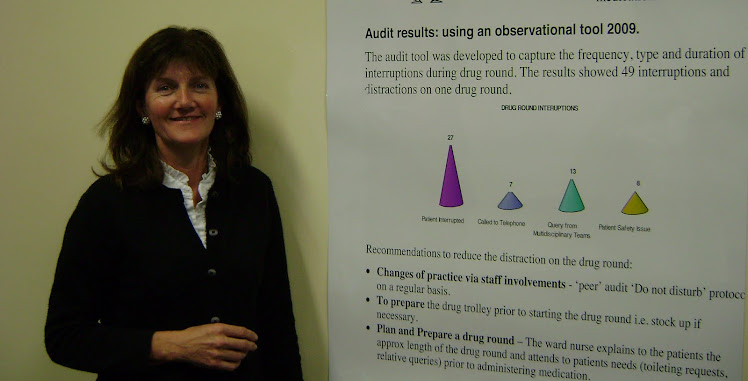
According to Kopp et al (2006) reports from his study on medication errors, that a lack of drug knowledge was the cause of 10% of errors and slips and memory lapses were responsible for 40% errors at the administration stage. As a clinical facilitator I find these figures not surprising, (Colera et al 1998) found that nearly a third of communications were interrupted, with an interruption rate of 11 per hour.
What is interesting is how (Moss et al 2008) in their summary states, how nurses who are administering many drugs and multiple drugs at the same time; how they are often interrupted: and rarely seek information regarding correct administration, even when this information is readily available. This is where I feel is the future of mobile clinical references are becoming a necessity to access current and evidence-based information at the ward level (at the point of care). What are your feeling on this subject??
References
Kopp, B. Erstad, B. Allen, M. Theodorou, A. Prestley, G. (2006). Medication errors and adverse drug events in an intensive care unit: Direct observation approach for detection. Critical care Medicine.34(2): 415-425
Moss, J. (2005) Technological system solutions to clinical communication errors. Journal of Nursing Administration 35(2)
audit conference
audit conference
Monday, May 30, 2011

Friday, May 27, 2011
RESPIRATORY CONFERENCE NOTES
Hi everyone, sorry for the delay in getting the power points published. I have one more power point that I am waiting for, Dr. S. Ryan, Respiratory Consultant, has promised that she will forward on her power point to me when she has the time.
I was very happy with the pre/post survey results from the conference. The findings were very positive. Its looks like we had a very attentive group and by the results ye all benefited from the day. Thank you again for taking part in the survey. If you have any comments - good or bad, please reply by using the comment box provided on the blog.
Now here are the power points presentations that were promised.
A list of Conference from April to September 2011 : https://docs.google.com/document/d/1HimjaqYqlPq3JuCvKwhmrvewMkGPGAv-mJDQGAshXsM/edit?hl=en_US#
The anatomy and physiology of the Respiratory system:
https://docs.google.com/present/edit?id=0AfiCRfy-aXfjZG45cGg0bl8zOGNoZ3RyNGRy&hl=en_US
Oxygen therapy:
https://docs.google.com/present/edit?id=0AfiCRfy-aXfjZG45cGg0bl8yMWNqZnJ6N2Zr&hl=en_US
Pulmonary Tuberculosis:
https://docs.google.com/leaf?id=0B_iCRfy-aXfjM2QyODJjN2YtODUxNy00NDg2LTk3ZmUtYjhmODkyOGVkYTc5&hl=en_US
Medication used in Respiratory conditions:
https://docs.google.com/leaf?id=0B_iCRfy-aXfjYjYyYjE3OTMtZmJmOC00NThhLWE4ZDEtZjIzYmExMWI2Yjlh&hl=en_US
Nutrition in chronic lung disease:
https://docs.google.com/present/edit?id=0AfiCRfy-aXfjZG45cGg0bl8xMTR3aGhmZzVjag&hl=en_US
COPD;
https://docs.google.com/leaf?id=0B_iCRfy-aXfjMGExNzljYmItMTQwNi00OTlmLWIxZGEtMGM5ZTZlYjRhY2I3&hl=en_US
I was very happy with the pre/post survey results from the conference. The findings were very positive. Its looks like we had a very attentive group and by the results ye all benefited from the day. Thank you again for taking part in the survey. If you have any comments - good or bad, please reply by using the comment box provided on the blog.
Oh, the winning ticket was number 83.
Now here are the power points presentations that were promised.
A list of Conference from April to September 2011 : https://docs.google.com/document/d/1HimjaqYqlPq3JuCvKwhmrvewMkGPGAv-mJDQGAshXsM/edit?hl=en_US#
The anatomy and physiology of the Respiratory system:
https://docs.google.com/present/edit?id=0AfiCRfy-aXfjZG45cGg0bl8zOGNoZ3RyNGRy&hl=en_US
Oxygen therapy:
https://docs.google.com/present/edit?id=0AfiCRfy-aXfjZG45cGg0bl8yMWNqZnJ6N2Zr&hl=en_US
Pulmonary Tuberculosis:
https://docs.google.com/leaf?id=0B_iCRfy-aXfjM2QyODJjN2YtODUxNy00NDg2LTk3ZmUtYjhmODkyOGVkYTc5&hl=en_US
Medication used in Respiratory conditions:
https://docs.google.com/leaf?id=0B_iCRfy-aXfjYjYyYjE3OTMtZmJmOC00NThhLWE4ZDEtZjIzYmExMWI2Yjlh&hl=en_US
Nutrition in chronic lung disease:
https://docs.google.com/present/edit?id=0AfiCRfy-aXfjZG45cGg0bl8xMTR3aGhmZzVjag&hl=en_US
COPD;
https://docs.google.com/leaf?id=0B_iCRfy-aXfjMGExNzljYmItMTQwNi00OTlmLWIxZGEtMGM5ZTZlYjRhY2I3&hl=en_US
Sunday, May 15, 2011
Getting ready for the Respiratory Conference day on the 19th May 2011.
Dear diary:
In the process of getting everything ready for the 19th May. Speakers not only are organised but are really excited about the day. They have put a lot of work into their presentations. My presentation is centered around drug errors. Although much has been written on the severity of drug errors, there is very little research in the nursing literature, specifically examining methods of dealing with poor medication calculation and the mathematical skills of nurses.
As we know the doctor prescribes the drug, the pharmacist dispenses the drugs and finally the nurse is responsible for administering the medication to the patient. Each nurse is accountable for the preparing, checking and administering, updating her/his knowledge of the medications (too numerous to estimate), monitoring the effectiveness of the treatment, reporting adverse reactions and teaching patients. And yet administering medication is just part of the nurses workload. The nurse has to function in a busy, understaffed, under resourced department with very little financial reward. Tell me, would this workload have anything to do with staff retention? Here am I rambling again - I am just passionate about the whole process where nurses are administering medication and yet I feel there is very little support for that nurse!!
Getting back to the 19th May, I hope you will enjoy the day. I hope it will be as successful as the day we had for the cardiac conference on the 19th April 2011.
Can I just add that, yes, I did promise to post up the power point presentations from our successful respiratory conference held last Thursday 19/5/11 - some of the lectures wanted to make some ammendements to thier presentations so, I should be able to post the complete conference notes on Friday the 27th May 2011.
Oh yes, I will have the winning ticket results to our fantastic prize also on that date....Good Luck
Wednesday, April 20, 2011
19th April 2011 Drug Treatment for Cardiovascular Disorders
Greetings again,
Thank you for coming to our conference in St. Michael's Hospital.
It was great to see you in the flesh, up to then it is all done by emails. I hope the conference brought benefit to everyone, most of all to our patient’s.The subject matter of this conference is of paramount importance. From the successful conference held last year 2010 "Setting standards for medication Management", there has been a demand to provide education in the area of medication administration.
It will be very interesting to see will these coming conferences be as successful as the Cardiac conference we had on Tuesday. Thank you for completing your evaluation sheets. They are very important because this is for the benefit of all nurses. yes, I sound pretentious but why not put our resources together and work together to help each other.
I hope you will come back and visit us in May -Respiratory, June - Gastric, July- Diabetes, August - Pain and September - urology.
I am including the power point presentations from the conference as promised.
Acute Coronary syndrome
https://docs.google.com/leaf?id=0B_iCRfy-aXfjZGY3NmVhYTMtMDRjNC00NmNiLWFiYTMtNmE5ZGQxNWJkMGI2&hl=en
Medication Management pre and post Angiography. |
https://docs.google.com/leaf?id=0B_iCRfy-aXfjMmZlY2I3NDAtNjNhZC00ZmIwLWJmNjgtNzQ2YWU0YTFmMmY0&hl=en
Cholesterol Medication
https://docs.google.com/leaf?id=0B_iCRfy-aXfjNDMyMmM5MzgtMjRkYy00ZGU0LWJmYmItN2U0ZDQ4ZGQ4ZjE2&hl=en
Cardiac arrest
https://docs.google.com/leaf?id=0B_iCRfy-aXfjODA2OTA3YTEtODg0My00YWRkLTgyYzYtOTRkMzE1ZWViZGEw&hl=en
Atrial fibrillation
https://docs.google.com/leaf?id=0B_iCRfy-aXfjMmFlZTg3Y2QtMWIzZi00M2Q1LWJiNWItOTg3M2NiOWU3NGZi&hl=en
As soon as I get Ms. Bronagh Travers presentation I will down load it.
The winning ticket drawn is Number 5 !!!
Can the winner contact me on the St. Michaels email address. Can you forward - on a picture of yourself for the web site?? congratulations >>>>
My letter to The Irish Times
The Irish Times - Monday, March 28, 2011
I just could not resist writing to the Geraldine Kennedy - editor to express my views.....
Health staff involved in up to 8,000 drug errors a year
CARL O'BRIEN
HEALTH WORKERS are involved in up to 8,000 medication errors or near-misses in Irish hospitals each year, new figures indicate.I just could not resist writing to the Geraldine Kennedy - editor to express my views.....
Madam, - As a Clinical Facilitator that is responsible for the career development of nurses, I read with great interest the article on 28th March dealing with data compiled by the State Claims Agency over a six year period. This indicated health workers are involved in up to 8,000 medication errors or near-misses per year in Irish hospitals of which over 7,000 are due to incorrect dosage.
When researching my thesis on medication management for my MBS in Health and Safety at Work, it became evident that medication errors are an international problem. For example in England
Dealing with the underlying causes of error requires a concerted effort from every department in the hospital. However to concentrate on one area, a survey by the HSE in 2009 revealed that newly qualified nurses were concerned about their own skills with drug calculations. This is particularly relevant as single person administration is now very common for economic reasons.
Medication administration is perhaps the highest risk activity a nurse can perform, as accidents can lead to devastating consequences for the patient and for the nurse's career.
There are many factors that can contribute to errors including heavy workload, distractions and interruptions.
As one approach to this, I have consulted with a developer friend to produce a simple application for mobile phones called “Dosage Calc”. This can double-check a wide range of common calculations giving the nurse some reassurance. I would welcome any input from those nurses in your readership during the pilot phase. The app is currently available as a free download from the Android market and will very shortly be available on iPhone and Blackberry.
Unlike some other countries, there is reluctance in Irish hospitals to allow the use of mobile devices among some staff. However it is worth mentioning that “Dosage Calc” and some other useful apps can be used in “Airplane mode” making interference with equipment very unlikely.

Tuesday, March 29, 2011
Health staff involved in up to 8,000 drug errors a year.
I came across this article that you might find very interesting- Fresh data from the State Claims Agency include figures of medication errors over a six year period.
http://www.irishtimes.com/newspaper/ireland/2011/0328/1224293220594.html
Its only the tip of the iceberg I suspect.
Thursday, March 24, 2011
New Mobile App for Nurses
Hi everybody, I am all excited I have made my first ever you tube presentation. This was on the subject of dosage calculations. I also demonstrated a brand new mobile app to support my colleagues in this area.
By the way you can find out how to install this app on your phone by visiting DosageCalc.
The app is free during the pilot and I am very interested in any feedback to make it even better.
Subscribe to:
Posts (Atom)